The Chrysler Building: A Machine-Age Crown for Midtown
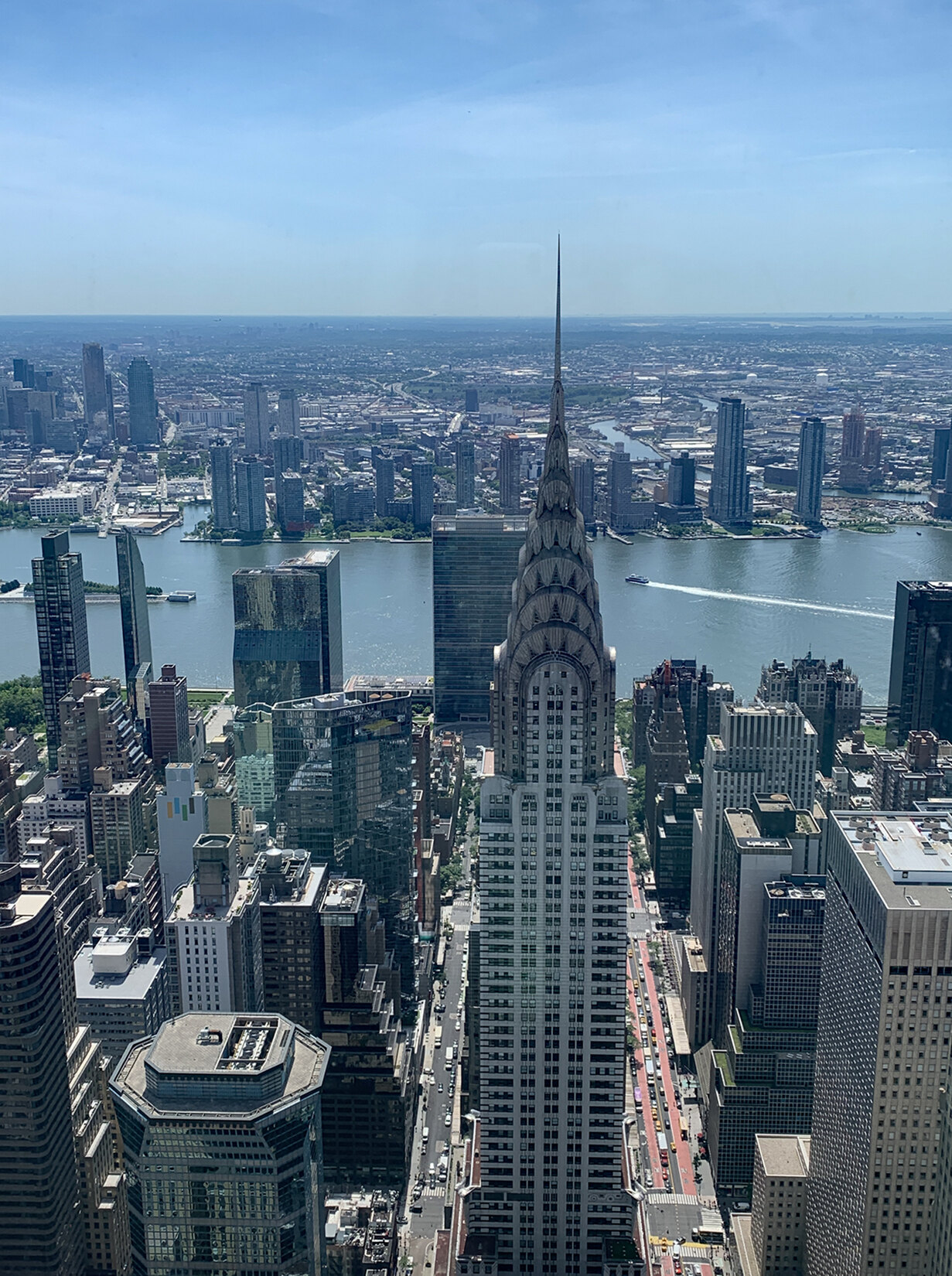
The Chrysler Building in 2022. Photograph by Changku88, via Wikimedia Commons. CC BY-SA 4.0.
At Lexington Avenue and East 42nd Street, the Chrysler Building turns a commercial office tower into a symbol of speed. Its stainless-steel crown catches the light like machinery, while stylized hubcaps, radiator caps, and eagle gargoyles carry the imagery of the automobile high above the street. Completed in 1930, the building joined engineering, advertising, and personal ambition in one of New York's clearest expressions of Art Deco design.
The project began without Walter P. Chrysler. Developer William H. Reynolds held a lease on land owned by Cooper Union and hired architect William Van Alen in 1927 to design a tower for the site. According to the New York City Landmarks Preservation Commission, Chrysler took over the project and the lease in October 1928. He was then expanding the automobile company that bore his name, but he financed the skyscraper personally rather than with corporate money. The result was both an investment and a monument to the industrial world that had made him successful.
Van Alen organized the tower as a series of setbacks, responding to the 1916 zoning law that required tall buildings to preserve light and air at street level. The setbacks rise toward a narrow shaft and then an extraordinary crown. At the lower levels, black granite, marble, metalwork, and geometric patterns establish a luxurious machine-age atmosphere. Higher up, brickwork creates abstract automotive forms. The 61st-floor eagles recall Chrysler hood ornaments, and the corners below them carry replicas of radiator caps from 1929 Chrysler automobiles.
The crown made the building famous. Seven stainless-steel arches step inward, filled with triangular windows and sunburst patterns. Their metal was chosen to resist corrosion, giving the top its enduring brightness. Inside that crown, Van Alen concealed a 185-foot spire assembled in sections. In October 1929, workers raised it through the building and set it in place, allowing the Chrysler to surpass 40 Wall Street in the contest to build the world's tallest tower.
That victory was dramatic but brief. The Chrysler Building opened in 1930 at 1,046 feet, becoming the first human-made structure to exceed 1,000 feet. Eleven months later, the Empire State Building took the height record. The Chrysler's reputation did not depend on keeping first place. Its silhouette was more distinctive, and its ornament gave the tower a personality that a simple height measurement could not capture.
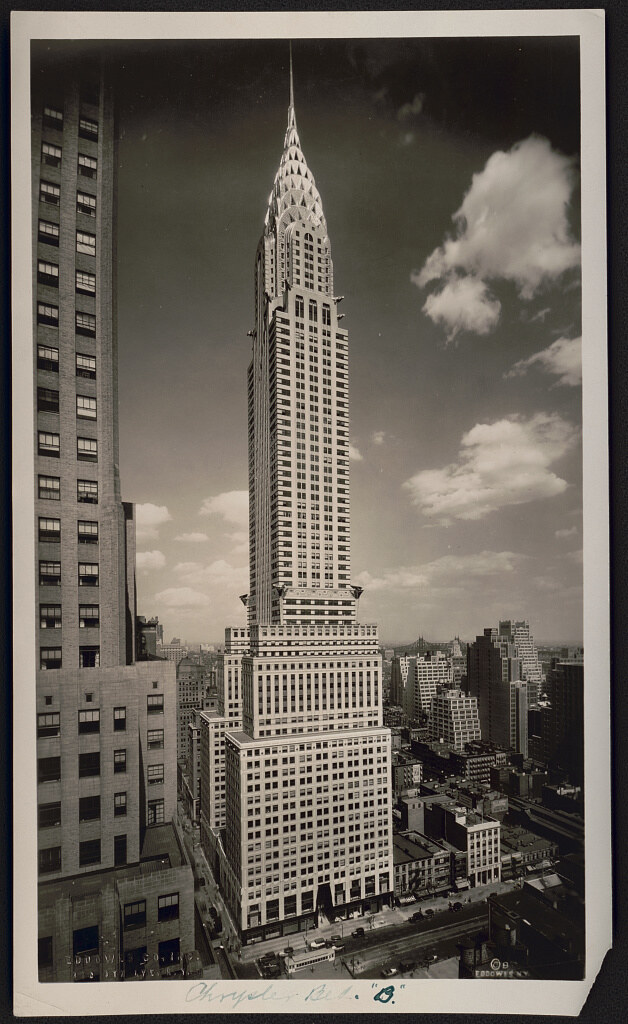
The Chrysler Building, ca. 1930. Photograph by Irving Browning. Library of Congress, Prints & Photographs Division. No known restrictions on publication.
The building also reveals the risks behind skyscraper spectacle. Van Alen and Chrysler fell into a dispute over the architect's fee, and Van Alen later said he was never fully paid. The tower opened as the Depression deepened, and its financial history became complicated by the unusual division between the building and the land beneath it. Cooper Union has continued to own the ground through a long-term lease arrangement, which means control of the structure can change while the institution retains the land.
That distinction matters today. RFR and Signa bought the leasehold interest in 2019, but a rent dispute led Cooper Union to terminate the lease and take control of the property in 2025. News reports in 2026 describe prospective buyers negotiating for a new leasehold interest, so it is more accurate to say that Cooper Union presently controls the building than to repeat an older ownership label as settled fact.
New York City designated the exterior a landmark in 1978 and the lobby interior soon afterward. Those protections recognize more than decorative skill. The Chrysler Building captures a moment when the skyscraper was simultaneously real estate, engineering feat, corporate image, and urban theater. Its height record lasted less than a year, but its crown still makes the Midtown skyline feel like the future imagined in 1930.
Sources
- New York City Landmarks Preservation Commission, Chrysler Building designation report (1978): https://s-media.nyc.gov/agencies/lpc/lp/0992.pdf
- National Park Service, National Historic Landmark documentation: https://npgallery.nps.gov/NRHP/GetAsset/NHLS/76001237_text
- Library of Congress, historic Chrysler Building photograph: https://www.loc.gov/item/2004673267/
- Bisnow, “RFR Evicted From Chrysler Building, Ending Feud With Cooper Union” (2025): https://www.bisnow.com/new-york/news/office/rfr-evicted-chrysler-building-ending-feud-with-cooper-union-127816